Freight Insurance UAE
Moving goods across borders involves different risks. Cargo can be damaged during loading, lost during transportation, affected by accidents, or exposed to theft and other unexpected events. Freight insurance UAE services help businesses protect the commercial value of their goods while they are being transported.
Cargo insurance can apply to shipments moving by sea, air, road, or multimodal transportation. UAE insurers offer different types of marine cargo policies depending on the shipment, frequency of transportation, cargo value, and required level of protection.
For importers, exporters, traders, manufacturers, and logistics businesses, understanding freight insurance can help them manage transportation risks more effectively.
What Is Freight Insurance in the UAE?
Freight insurance, commonly referred to as cargo or marine cargo insurance, provides financial protection against covered loss or physical damage to goods while they are in transit.
Despite the name “marine cargo insurance,” the coverage does not necessarily mean that goods must travel by sea. UAE insurance providers offer cargo protection for goods transported by:
- Sea freight
- Air freight
- Road freight
- Rail freight
- Multimodal transportation
- Parcel or courier services
For example, ADNIC states that its marine cargo insurance can cover accidental physical loss or damage during transit by sea, air, land, or parcel post.
Why Is Freight Insurance Important?
Transportation involves several stages where cargo can be exposed to risk.
A shipment may pass through:
Supplier → Pickup → Warehouse → Loading → Border/Port → Transportation → Customs → Final Delivery
Damage or loss can potentially occur at different points in this process.
Freight insurance gives businesses an additional layer of financial protection for covered risks. This can be especially important when transporting expensive machinery, electronics, commercial inventory, fragile products, or large shipments.
Cargo insurance is also different from simply relying on a carrier’s liability. Specialist logistics insurers note that carrier liability may not match the full commercial value of the cargo.
What Does Freight Insurance Cover?
The exact coverage depends on the insurance policy and its terms. Common cargo insurance arrangements can provide protection against covered physical loss or damage during transportation.
Depending on the selected policy, coverage may include risks such as:
- Accidental cargo damage
- Fire
- Collision or overturning
- Theft or pilferage
- Certain natural disasters
- Damage during transportation
- Certain loading and unloading risks
- War and strikes when specifically included
For example, UAE marine cargo insurance products can provide cover for accidental physical loss or damage, while separate war and strikes extensions may be available.
The actual protection always depends on the policy wording, exclusions, limits, deductibles, and applicable conditions.
Types of Freight Insurance in the UAE
Single Shipment Cargo Insurance
A single cargo policy is designed for a specific shipment.
It can be useful for businesses that:
- Ship occasionally
- Have a one-time high-value shipment
- Need insurance for a specific import or export
- Want cover for a particular transportation movement
ADNIC, for example, offers a Single Cargo Policy for one-time shipments.
Open Cargo Insurance
Businesses that ship goods regularly may prefer an open cargo policy.
Instead of arranging separate insurance for every shipment, an open-cover arrangement can provide ongoing protection for declared shipments during the policy period. This can simplify insurance management for regular importers, exporters, distributors, and trading companies.
Marine Cargo Insurance
Marine cargo insurance can protect goods transported through international supply chains. Depending on the policy, it can cover cargo moving by sea, air, road, or other approved transportation methods.
Inland Freight Insurance
Businesses transporting products by truck within the UAE or across regional road routes may also require cargo protection for inland transportation.
This can be particularly relevant for shipments moving between warehouses, ports, distribution centers, and GCC destinations.
Freight Insurance for UAE to GCC Cargo
Businesses regularly moving cargo from the UAE to Saudi Arabia, Oman, Qatar, Bahrain, and Kuwait can consider cargo insurance as part of their overall logistics planning.
For example, a shipment may move:
Dubai → Saudi Arabia
or
Sharjah → Oman
or
UAE → Qatar
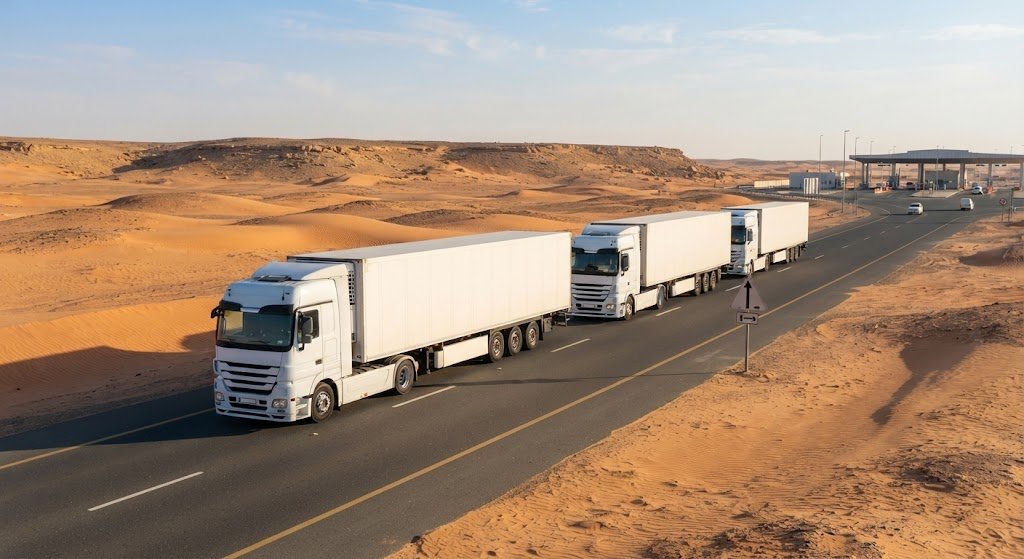
Road transportation involves risks such as traffic accidents, vehicle overturning, theft, fire, and cargo damage. The applicable insurance policy determines which of these risks are covered.
For businesses handling frequent GCC shipments, an open cargo policy may provide a more practical arrangement than arranging individual cover for every shipment.
Freight Insurance for Sea Cargo
Sea freight can involve long transportation distances and multiple handling points.
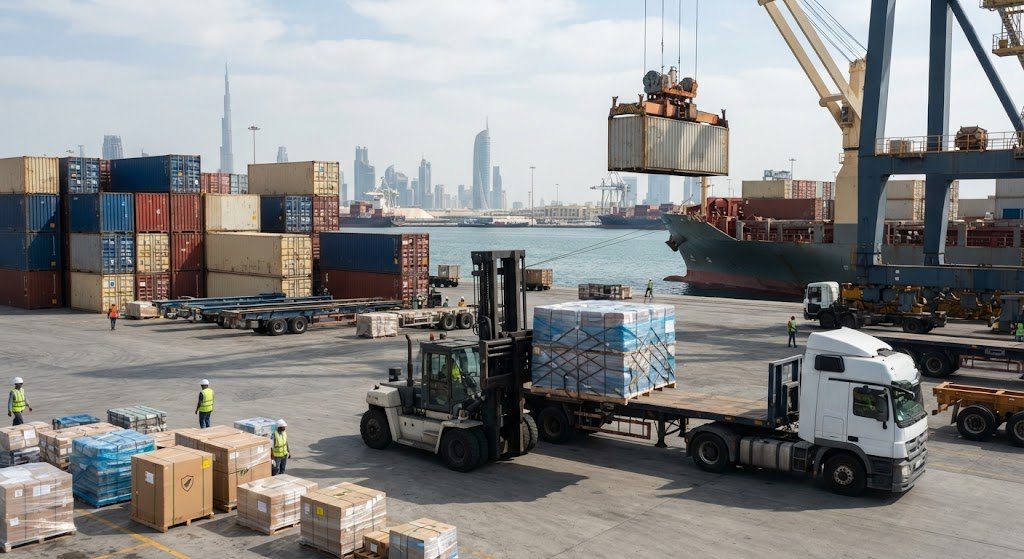
Containers may be loaded at a warehouse, transported to a port, loaded onto a vessel, discharged at the destination, and then moved to the final delivery location.
Cargo insurance can be arranged for goods moving through these stages, subject to the policy terms.
UAE marine insurance providers offer cargo coverage for international shipments, including warehouse-to-warehouse arrangements in suitable policies.
Freight Insurance for Air Cargo
Air freight is commonly used for urgent, high-value, or time-sensitive shipments.
Examples include:
- Electronics
- Spare parts
- Medical supplies
- Documents and samples
- High-value commercial products
- Technology equipment
Although air freight is generally fast, cargo can still be exposed to handling and transportation risks. Businesses can arrange cargo insurance according to the value and nature of their shipment.
Freight Insurance for Road Transportation
Road freight is widely used for UAE domestic distribution and GCC transportation.
A road cargo shipment may travel through several locations before reaching the final customer. Insurance can provide protection against covered physical loss or damage during the insured transit.
This can be useful for businesses transporting:
- Machinery
- Furniture
- Building materials
- Electronics
- Industrial equipment
- Retail products
- Commercial inventory
What Is Not Usually Covered?
Cargo insurance does not automatically cover every possible loss.
Common exclusions or limitations may include:
- Normal wear and tear
- Inherent defects in the goods
- Poor or unsuitable packaging
- Certain delays
- Certain consequential financial losses
- Uninsured risks
- Losses outside the insured transit
- Events specifically excluded by the policy
The exact exclusions vary between policies. For example, cargo insurance providers identify inadequate packaging, inherent vice, and delay-related financial loss among common exclusions under certain cargo policy wordings.
Therefore, businesses should read the policy wording carefully before selecting coverage.
How Much Does Freight Insurance Cost in the UAE?
There is no single freight insurance price for every shipment.
The premium can depend on factors such as:
- Cargo value
- Type of goods
- Origin and destination
- Transportation method
- Shipping route
- Packaging
- Cargo history
- Claims history
- Coverage level
- Policy limits
- Deductible
- War and strikes coverage
- Nature of the cargo
High-value or sensitive cargo may require more specialized underwriting.
For this reason, businesses should provide accurate shipment details when requesting a freight insurance quotation.
Factors That Affect Cargo Insurance Premiums
Cargo Value
Higher-value shipments generally represent greater financial exposure.
Type of Product
Electronics, machinery, pharmaceuticals, fragile products, and other sensitive goods may have different insurance requirements.
Route
The origin, destination, transportation method, and specific route can affect the risk assessment.
Packaging
Proper packaging helps reduce physical damage risks. Poor packaging can also create coverage issues under certain policy conditions.
Transportation Method
Sea, air, road, and multimodal shipments can have different risk profiles.
Frequency of Shipments
Businesses shipping regularly may consider an open cargo policy rather than arranging separate insurance for every shipment.
Freight Insurance and Carrier Liability Are Not the Same
One important point for importers and exporters is the difference between cargo insurance and carrier liability.
Carrier liability is the responsibility a carrier may have under the applicable transport contract, law, convention, or terms and conditions.
Cargo insurance is designed to protect the insured cargo interest according to the insurance policy.
These are not automatically the same thing.
A business should therefore understand:
- Who is responsible for the cargo?
- What are the carrier’s liability limits?
- Is separate cargo insurance required?
- What risks are insured?
- What exclusions apply?
- What documentation is required for a claim?
Understanding these points before shipping can prevent confusion if cargo is damaged or lost.
Documents Needed for Freight Insurance
Insurance requirements vary, but businesses may be asked to provide information such as:
- Commercial invoice
- Packing list
- Shipment details
- Cargo description
- Cargo value
- Origin and destination
- Bill of lading or airway bill
- Transport documents
- Photos of damaged goods
- Survey or inspection report where required
- Proof of loss
Accurate documentation is important both when arranging coverage and when making a claim.
How to Reduce Cargo Risk
Insurance is only one part of cargo risk management.
Businesses can also reduce transportation risks by:
Use Proper Packaging
Select packaging appropriate for the product, transportation method, and expected handling conditions.
Check Cargo Before Dispatch
Inspect the shipment and document its condition before transportation.
Use Suitable Loading Methods
Correct loading, securing, palletization, and container handling can help reduce physical damage.
Keep Accurate Documents
Maintain invoices, packing lists, transport documents, and cargo records.
Track Shipments
Shipment tracking can help businesses identify delays and unexpected events earlier.
Choose Suitable Coverage
Do not select insurance only by comparing the lowest premium. Review the actual coverage, exclusions, limits, and deductible.
Freight Insurance for Businesses
Freight insurance can be useful for many types of businesses operating in the UAE.
Importers
Importers can protect incoming inventory during international transportation.
Exporters
Exporters can arrange suitable cargo protection before goods leave the UAE.
Trading Companies
Trading businesses handling regular shipments may benefit from open cargo arrangements.
Manufacturers
Manufacturers can protect raw materials, finished products, machinery, and components while in transit.
E-Commerce Businesses
Online sellers moving commercial inventory between countries can consider cargo insurance for valuable shipments.
Logistics Companies
Freight forwarders and logistics providers may need separate liability and cargo-related insurance arrangements depending on their operations and contractual responsibilities.
How to Arrange Freight Insurance in the UAE
The process normally starts with providing the insurer or broker with shipment information.
Step 1: Share Cargo Details
Provide the product type, quantity, value, packaging, and shipment information.
Step 2: Provide Route Information
Give the origin, destination, transportation method, and expected transit details.
Step 3: Select Coverage
Discuss the level of protection required and any additional coverage options.
Step 4: Review Terms
Check the insured value, limits, exclusions, deductible, and policy conditions.
Step 5: Issue the Policy
Once the terms are agreed and the policy is issued, the shipment can move according to the applicable insurance conditions.
Why Businesses Should Consider Freight Insurance UAE
Cargo is often one of the most valuable parts of an international transaction. A transportation problem can therefore create a significant financial impact.
Freight insurance UAE provides businesses with a structured way to manage covered cargo risks during transportation.
Whether goods are moving by road from Dubai to Saudi Arabia, by sea from Jebel Ali to an international destination, or by air from the UAE to another country, the appropriate cargo insurance policy can provide additional financial protection.
However, insurance should always be selected according to the actual shipment and policy wording. Coverage, exclusions, limits, and claim conditions can differ between insurers and policies.