Bahrain to UAE Sea Freight Lane
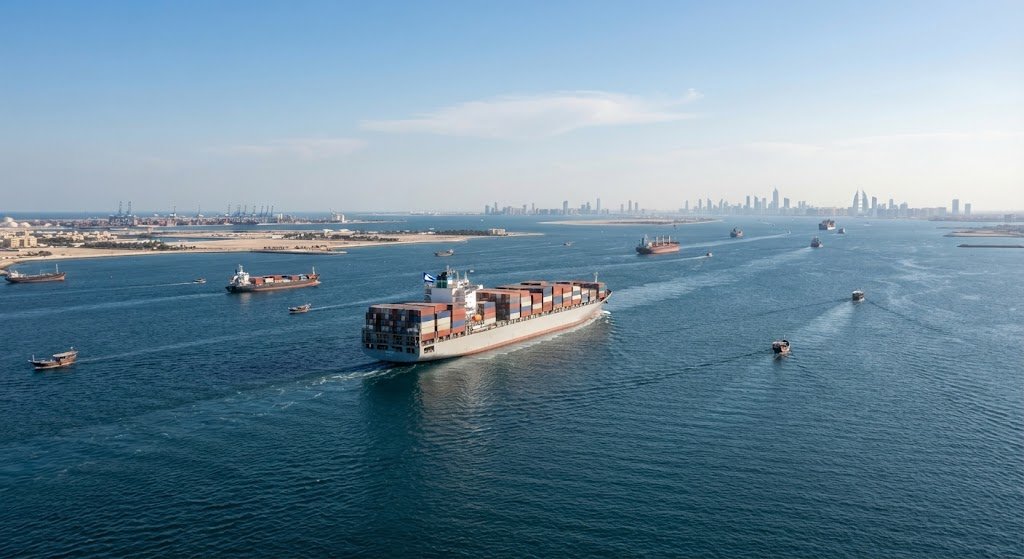
Businesses moving commercial goods between Bahrain and the United Arab Emirates need a dependable shipping route that can handle cargo collection, port procedures, documentation, customs, and final delivery. The Bahrain to UAE sea freight lane provides an important maritime connection between the two Gulf markets, supporting both full-container and smaller consolidated shipments. Bahrain’s Khalifa Bin Salman Port is a major container and general cargo gateway in the Kingdom. It has deep-water berths, a container terminal, and regional connections that support Gulf trade. On the UAE side, cargo can be routed through major ports such as Jebel Ali and Khalifa Port, depending on the shipping service, destination, and cargo requirements. What Is the Bahrain to UAE Sea Freight Lane? The Bahrain to UAE sea freight lane refers to the maritime transportation of cargo from Bahrain to ports in the United Arab Emirates. A typical shipment may follow: Bahrain Warehouse → Khalifa Bin Salman Port → Gulf Sea Route → Jebel Ali / UAE Port → Customs → Final Delivery The exact port rotation depends on the shipping line and service selected. Published shipping schedules show direct Jebel Ali–Khalifa Bin Salman connections, while other services may include an intermediate Gulf port. Main Bahrain Port for UAE Sea Freight Khalifa Bin Salman Port Khalifa Bin Salman Port is located in Hidd, Bahrain, and serves as a major container gateway for the Kingdom. The port includes container handling facilities and deep-water access suitable for large vessels. Its location also provides connections to Bahrain’s road network and the King Fahad Causeway toward Saudi Arabia. For Bahrain-to-UAE sea freight, the port can serve as the origin point for containers and consolidated cargo heading toward UAE ports. UAE Ports for Bahrain Sea Freight Jebel Ali Port Jebel Ali is one of the major container ports serving Dubai and the wider UAE market. Current shipping schedules show direct maritime routes between Jebel Ali and Khalifa Bin Salman Port, with some published services indicating approximately two days for a direct scheduled sailing. Actual transit time can vary according to the vessel schedule, port operations, cargo type, and booking. Khalifa Port Abu Dhabi’s Khalifa Port is another important UAE gateway for containerized and commercial cargo. Regional shipping services connect Gulf ports with Khalifa Port, and some services combine Bahrain with other Gulf destinations before arriving in Abu Dhabi. The appropriate destination port depends on the final delivery location and available sailing. Bahrain to UAE FCL Sea Freight Full Container Load (FCL) is suitable when a business has enough cargo to use a complete container. FCL can be useful for: Large commercial shipments Wholesale inventory Machinery Furniture Construction materials Industrial equipment Retail stock Palletized products A dedicated container can reduce the need to consolidate your cargo with unrelated shipments. Businesses can select container sizes according to their cargo volume and shipping requirements. Bahrain to UAE LCL Sea Freight Less Than Container Load (LCL) is suitable for smaller shipments that do not require a full container. Instead of booking an entire container, cargo from multiple customers can be consolidated into one container. LCL can be useful for: Cartons Small pallets Spare parts Commercial samples Retail products Small equipment E-commerce inventory The shipment is consolidated at the origin and separated at the destination before final delivery. Bahrain to UAE Door-to-Door Sea Freight Door-to-door sea freight combines ocean transportation with pickup and final delivery. A typical process is: Bahrain Pickup → Port Handling → Sea Freight → UAE Port → Customs Clearance → UAE Delivery This can be useful for businesses that do not want to arrange separate transport companies for the origin pickup and UAE delivery. For example, cargo can be collected from a Bahrain warehouse, transported to Khalifa Bin Salman Port, shipped to Jebel Ali, cleared through customs, and delivered to a Dubai warehouse. Bahrain to Dubai Sea Freight Dubai is a major destination for Bahrain-origin commercial cargo. For shipments destined for Dubai, Khalifa Bin Salman Port → Jebel Ali can provide a direct maritime connection when the relevant sailing is available. Current route schedules list direct services between the two ports. After arrival at Jebel Ali, cargo can proceed through UAE customs before final delivery to: Dubai Jebel Ali Al Quoz Ras Al Khor Dubai Investment Park Deira Other UAE locations Bahrain to Abu Dhabi Sea Freight Businesses shipping to Abu Dhabi can consider services connecting Bahrain with Khalifa Port. The best option depends on the available sailing schedule, container requirements, cargo type, and final delivery location. After port arrival, inland transportation can be arranged to the consignee’s warehouse or business address. Bahrain to Sharjah and Ajman Sea freight does not necessarily mean that cargo must be delivered directly from the vessel to the final city. For shipments destined for Sharjah or Ajman, cargo can arrive at a suitable UAE port and then continue by road. The overall movement can be: Bahrain → UAE Port → Customs → Trucking → Sharjah/Ajman This multimodal approach combines sea transportation with UAE road delivery. Bahrain to UAE Sea Freight Transit Time Transit time depends on the selected carrier, sailing schedule, port rotation, customs procedures, and final delivery. Published route schedules currently show some direct Jebel Ali–Khalifa Bin Salman services with an estimated sailing time of around 2 days, while other services can take longer because of intermediate port calls. Therefore, businesses should distinguish between: Port-to-port sailing time Port handling time Customs clearance Inland delivery time Total door-to-door transit time A freight quotation should provide the expected schedule for the specific booking rather than relying on a generic transit estimate. Customs Clearance for Bahrain to UAE Cargo Customs documentation is an important part of international sea freight. Depending on the cargo and transaction, documents may include: Commercial invoice Packing list Certificate of origin Bill of lading Import documentation Export documentation HS code Consignee information Customs declaration Other product-specific certificates where required Businesses should make sure the information on the commercial documents matches the physical cargo. Incorrect product descriptions, quantities, values, or HS classifications can