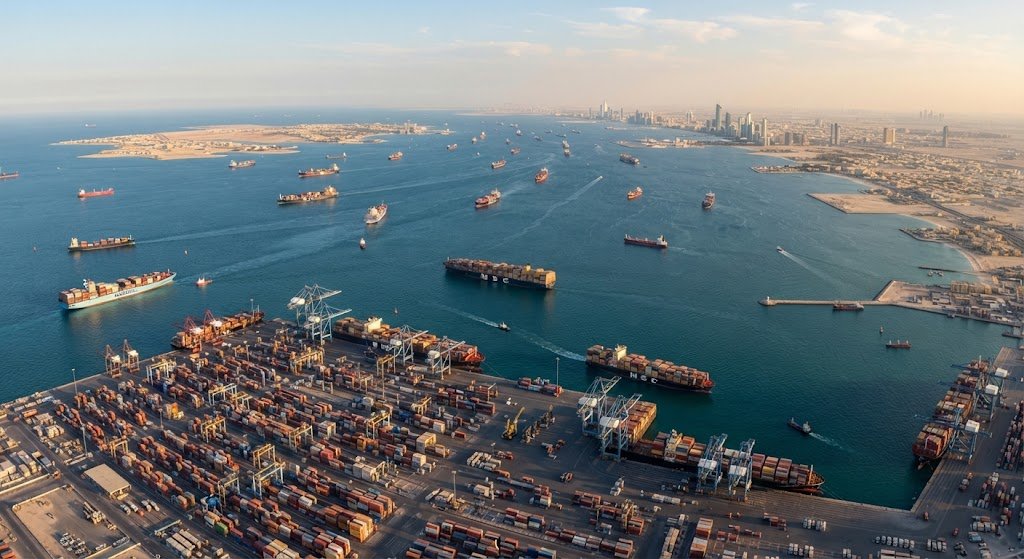
UAE to Gulf Sea Freight Network
The UAE to Gulf sea freight network plays an important role in connecting businesses across the GCC. Companies use sea freight to move commercial goods, industrial materials, machinery, retail products, containers, and other cargo between the UAE and major Gulf markets.
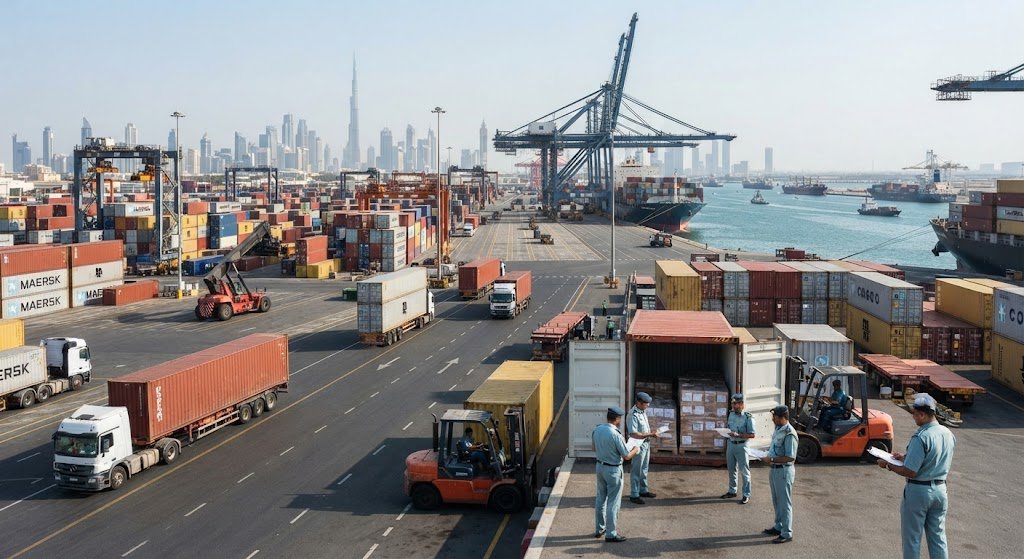
The UAE has several important maritime gateways, including Jebel Ali, Khalifa Port, Khor Fakkan, Fujairah, and Sharjah Ports. Depending on the destination, cargo can move through direct sea services, feeder networks, transshipment points, or combined sea and landbridge solutions.
For businesses shipping to Saudi Arabia, Bahrain, Qatar, Kuwait, or Oman, choosing the right port and transportation method can help manage delivery schedules, documentation, customs procedures, and transportation costs.
What Is the UAE to Gulf Sea Freight Network?
The UAE to Gulf sea freight network refers to the connected maritime and logistics routes used to transport cargo from UAE ports to destinations across the Arabian Gulf and nearby regional gateways.
A shipment may follow a simple port-to-port route or use multiple transportation stages. For example, cargo can be discharged at an alternative UAE port and then transported by truck or feeder service to another Gulf destination.
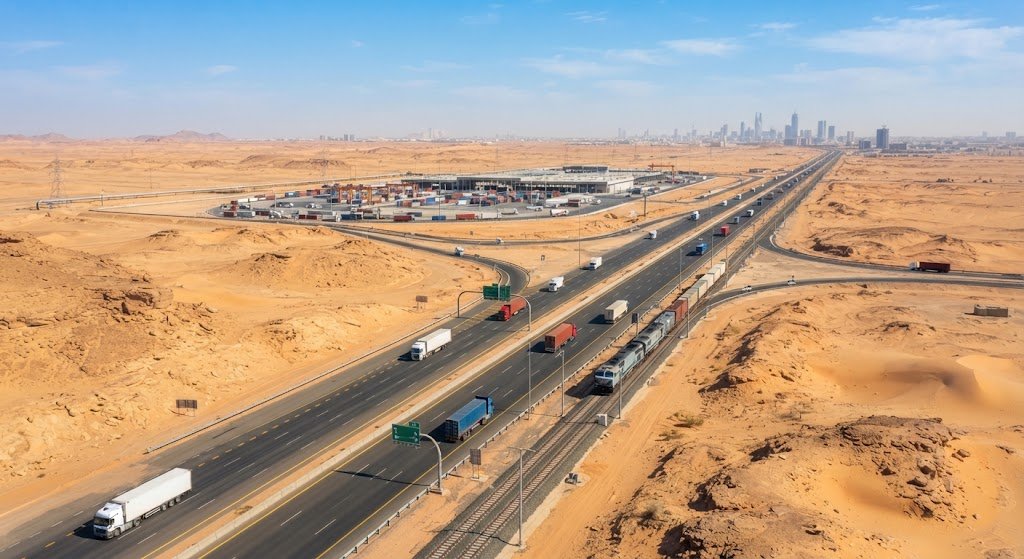
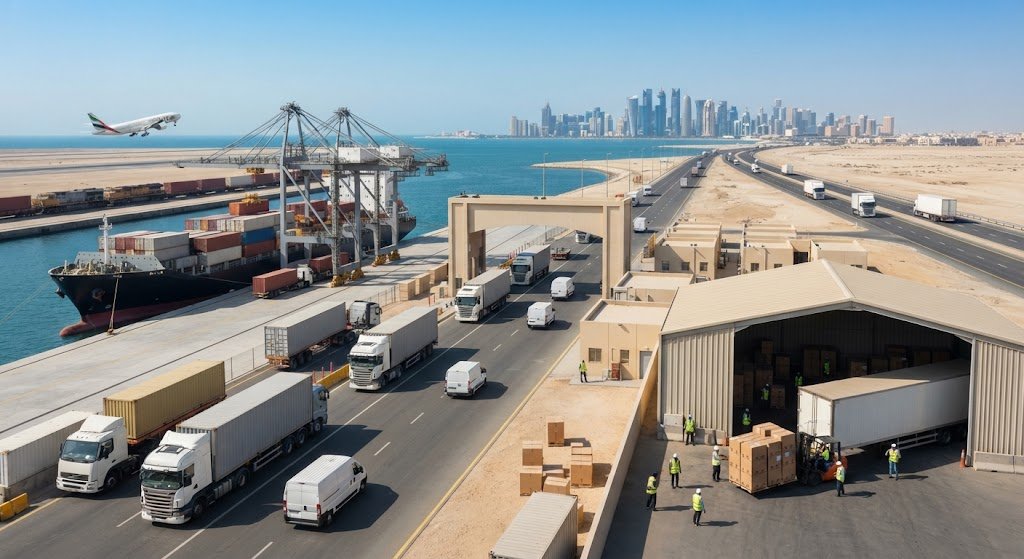
Current logistics networks also use multimodal solutions combining sea freight, land transportation, feeder vessels, bonded trucking, and transshipment.
Major UAE Ports for Gulf Sea Freight
Jebel Ali Port
Jebel Ali is a major UAE gateway for containerized cargo and regional distribution. It can be used as a starting point for shipments serving several GCC markets, depending on available carrier schedules and operational conditions.
Cargo moving through Jebel Ali may connect with regional feeder services or continue through landbridge arrangements.
Khalifa Port
Khalifa Port in Abu Dhabi is another important gateway for container and commercial cargo. It supports UAE supply chains and can form part of wider regional maritime and multimodal networks.
Khor Fakkan Port
Khor Fakkan is particularly important for container transshipment and alternative routing. Its location on the UAE’s east coast makes it useful for certain Gulf and international shipping arrangements.
Recent regional logistics networks have increased the role of Khor Fakkan as an alternative gateway, including connections with Jebel Ali and onward GCC landbridge transportation.
Fujairah Port
Fujairah provides another strategic UAE maritime gateway outside the traditional Gulf route. It can support alternative routing and multimodal cargo solutions when required.
Regional logistics operators have used Fujairah together with Khor Fakkan, Sohar, Salalah, and Jeddah to maintain cargo connectivity during changing maritime conditions.
UAE to Saudi Arabia Sea Freight
Saudi Arabia is one of the major destinations within the wider UAE to Gulf freight network.
Cargo can be planned toward Saudi ports such as:
- Dammam
- Jubail
- Jeddah
- King Abdullah Port
For eastern Saudi Arabia, Gulf-related routes can be considered, while Jeddah and King Abdullah Port provide access to the Red Sea side of Saudi Arabia.
Where direct maritime routing is unavailable or unsuitable, multimodal solutions can combine sea freight with landbridge transportation. Current carrier networks also use Jeddah and other gateways as part of regional alternatives.
UAE to Bahrain Sea Freight
Bahrain is another important destination within the regional freight network.
Shipments can be routed toward Khalifa Bin Salman Port, depending on carrier schedules, cargo type, and current operational availability.
Bahrain can also be connected through feeder and multimodal arrangements. For commercial shipments, businesses may choose FCL for full-container cargo or LCL when the shipment does not require a complete container.
Because vessel schedules and regional operating conditions can change, current sailing availability should be confirmed before booking.
UAE to Qatar Sea Freight
Qatar is also connected to the broader Gulf maritime network through its major gateway at Hamad Port.
Businesses shipping from the UAE may use containerized sea freight for commercial cargo, machinery, equipment, retail goods, and other suitable shipments.
Depending on the current carrier network, cargo may move through direct or feeder services, while alternative multimodal routes can combine UAE port handling with land transportation.
UAE to Kuwait Sea Freight
Kuwait provides access to the northern Gulf market through ports such as Shuwaikh and Shuaiba.
Sea freight can be useful for larger commercial consignments that are not highly time-sensitive. Depending on the shipping service, cargo may travel through feeder networks or use multimodal arrangements involving other regional gateways.
Current logistics providers continue to develop alternative GCC routing solutions involving UAE ports, Oman, Saudi Arabia, and other regional gateways.
UAE to Oman Sea Freight
Oman is an important part of the UAE to Gulf sea freight network, with major maritime gateways including:
- Sohar
- Salalah
- Duqm
Sohar is particularly relevant for Gulf-region cargo, while Salalah provides access to wider Indian Ocean and international shipping networks.
Alternative routing through Oman can also support GCC cargo movement when traditional Gulf shipping routes face operational restrictions.
FCL and LCL Sea Freight
Businesses can select different container solutions depending on shipment volume.
FCL Sea Freight
Full Container Load (FCL) is suitable when a company has enough cargo to use most or all of a container.
Benefits include:
- Dedicated container capacity
- Reduced cargo handling
- Better suitability for large shipments
- More control over container loading
- Suitable for regular commercial cargo
LCL Sea Freight
Less than Container Load (LCL) is useful for smaller shipments that do not require a complete container.
With LCL, cargo from different shippers may share container space. This can provide a practical option for businesses shipping smaller quantities.
Door-to-Door Gulf Sea Freight
A complete UAE to Gulf sea freight network does not have to stop at the destination port.
Door-to-door logistics can include:
- Pickup from the UAE warehouse
- Cargo inspection and preparation
- Export documentation
- Transportation to the departure port
- Container loading
- Sea transportation
- Destination port handling
- Customs clearance
- Inland transportation
- Final delivery
This integrated approach gives businesses one coordinated logistics process instead of arranging each stage separately.
Customs Clearance and Documentation
International Gulf shipments require accurate documentation. Depending on the shipment and destination, common documents may include:
- Commercial invoice
- Packing list
- Bill of lading
- Certificate of origin
- Export documentation
- Import documentation
- Customs declarations
- Product-specific permits where applicable
Correct product descriptions, quantities, values, weights, and consignee information can help reduce documentation problems.
For GCC movements involving bonded transit, customs guarantees and transit documentation may also be required depending on the route and arrangement.
Types of Cargo Supported
The UAE to Gulf sea freight network can support many types of commercial shipments, including:
- General cargo
- Retail products
- Industrial equipment
- Machinery
- Construction materials
- Spare parts
- Furniture
- Packaging materials
- Agricultural products
- Automotive components
- Consumer goods
- Palletized cargo
- Containerized commercial shipments
Special cargo requirements should be discussed before booking so the correct equipment and handling arrangements can be selected.
Transit Time for Gulf Sea Freight
Sea freight transit time depends on the destination, vessel schedule, port operations, transshipment requirements, customs clearance, and inland delivery.
A shipment may move faster when a suitable direct or feeder service is available. Transshipment and multimodal routes can take longer because they involve additional handling and transportation stages.
Businesses should therefore request a route-specific transit estimate rather than relying on one fixed delivery time for every Gulf destination.
Factors Affecting Sea Freight Cost
The cost of shipping through the UAE to Gulf sea freight network can depend on several factors:
1. Cargo Volume and Weight
Larger and heavier shipments can require different container or handling arrangements.
2. FCL or LCL
Full-container and shared-container shipments have different pricing structures.
3. Origin and Destination Ports
The selected ports can affect ocean freight, handling, and inland transportation charges.
4. Cargo Type
Special handling, temperature-controlled transportation, oversized cargo, or regulated goods may increase costs.
5. Customs and Documentation
Clearance fees, duties, inspections, and documentation requirements can affect the final shipment cost.
6. Current Market Conditions
Fuel prices, vessel capacity, port congestion, route changes, insurance, and regional operating conditions can influence freight rates.
Current Gulf Shipping Conditions
Gulf shipping conditions can change quickly. Recent 2026 logistics reports have described continued use of alternative gateways such as Khor Fakkan, Fujairah, Sohar, Salalah, and Jeddah, together with landbridge arrangements, while some UAE ports have experienced increased cargo volumes and congestion.
As a result, the most suitable route may change depending on the shipment date. Businesses should confirm vessel availability, port conditions, transit arrangements, and applicable surcharges before finalizing a booking.
How to Prepare Your Gulf Sea Freight Shipment
Before sending cargo, businesses should:
- Confirm the exact origin and destination
- Select FCL or LCL
- Prepare the commercial invoice
- Prepare the packing list
- Confirm cargo weight and dimensions
- Check customs requirements
- Confirm product-specific permits if required
- Use suitable packaging
- Provide accurate consignee details
- Confirm the current vessel or multimodal schedule
- Ask for a complete freight quotation
Good preparation can reduce avoidable delays during port handling and customs processing.
Why Choose Saif Cargo for UAE to Gulf Sea Freight?
Saif Cargo Shipping Services provides coordinated cargo and freight solutions for businesses moving shipments between the UAE and GCC markets.
Our services can include:
- Sea freight
- FCL and LCL cargo
- Door-to-door delivery
- Port-to-port shipping
- GCC road freight
- Customs coordination
- Cargo documentation
- Warehouse and storage support
- Multimodal transportation
- Shipment tracking and updates
The right logistics plan depends on your cargo, destination, required delivery time, and current route availability. Saif Cargo can help businesses select a suitable transportation arrangement for their shipment.
Contact Saif Cargo Shipping Services
Send us your UAE to Gulf sea freight requirements to receive a customized shipping quotation.
🌐 Website: Saif Cargo Shipping Services
📱 Quick WhatsApp Booking: WhatsApp Booking
📞 Call / WhatsApp: +971 55 405 0258
📘 Facebook: Saif Cargo Shipping Services on Facebook
Contact our logistics specialists today for customized UAE to Gulf sea freight network solutions.