UAE to Gulf Sea Freight Routes
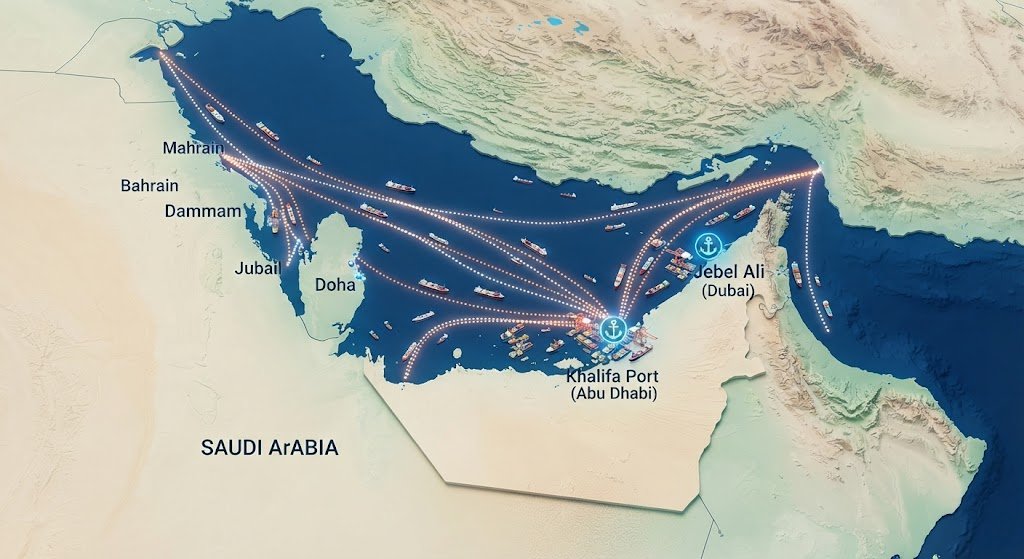
Businesses across the Gulf regularly move commercial goods between the UAE and other GCC markets. As a result, UAE to Gulf sea freight routes play an important role in regional supply chains. Sea freight can be a practical choice for businesses moving large, heavy, or non-urgent shipments. Depending on the destination and current carrier operations, cargo can move through major UAE ports such as Jebel Ali, Khor Fakkan, Fujairah, Khalifa Port, and other regional gateways. Current regional shipping networks also use combinations of sea freight and landbridge transportation to maintain Gulf connectivity when direct maritime routes are affected. Main UAE to Gulf Sea Freight Routes The UAE has several major ports that connect businesses with markets across the Arabian Gulf. Important UAE gateways include: Jebel Ali Port Khalifa Port Khor Fakkan Port Fujairah Port Sharjah Ports Sharjah Ports, for example, operates facilities on both the Arabian Gulf and UAE east coast and identifies Khor Fakkan as an important container transshipment hub. The best port depends on the destination, shipping line, cargo type, vessel schedule, and current operational conditions. UAE to Saudi Arabia Sea Freight Saudi Arabia is one of the most important Gulf markets for UAE exporters. Sea freight can connect UAE cargo with Saudi ports such as: Dammam Jubail Jeddah King Abdullah Port For shipments destined for eastern Saudi Arabia, Gulf and Arabian Sea routing options can be considered. For western Saudi Arabia, Jeddah and King Abdullah Port can provide access to the Red Sea side of the Kingdom. Current carrier networks also use multimodal landbridge solutions when direct Gulf routing is restricted or operationally unsuitable. UAE to Bahrain Sea Freight Route Bahrain is another important destination for UAE commercial cargo. A sea freight shipment can be planned toward Khalifa Bin Salman Port in Bahrain, depending on available carrier schedules and cargo requirements. Some regional services have historically connected UAE ports with Bahrain through Arabian Gulf feeder networks. For example, APL’s Jebel Ali–Middle East Express lists Bahrain Khalifa Bin Salman Port within its regional service network. For urgent or time-sensitive cargo, customers should confirm the current vessel schedule before booking because maritime schedules can change. UAE to Qatar Sea Freight Route Qatar is an important destination for UAE exporters and distributors. The main commercial gateway is Hamad Port, which handles container and general cargo operations. Depending on current carrier availability, UAE cargo may move through direct or feeder services. In some operational conditions, multimodal solutions can also combine maritime shipping with landbridge transportation. Current regional carrier updates show that cargo routing to Qatar can be adjusted through alternative gateways such as Salalah, Khor Fakkan, Jeddah, or other hubs depending on operational conditions. Therefore, the most suitable route should be confirmed when the shipment is booked. UAE to Kuwait Sea Freight Route Kuwait is another major Gulf market for commercial shipments. Common maritime destinations include: Shuwaikh Port Shuaiba Port A UAE shipment can be planned through available feeder and regional container services. APL’s Arabian Gulf service, for example, includes Jebel Ali and Shuwaikh in its network. For larger commercial shipments, FCL sea freight can provide dedicated container capacity. Smaller shipments can use LCL services where available. UAE to Oman Sea Freight Route Oman has several important ports that can support regional cargo transportation. Key destinations include: Sohar Salalah Duqm Oman can also act as a regional logistics hub when cargo is moved through alternative multimodal routes. Current regional logistics information identifies Sohar, Salalah, and Duqm as important maritime gateways, with Salalah also serving as a landbridge hub for GCC cargo in certain routing arrangements. Jebel Ali to Gulf Sea Freight Routes Jebel Ali Port is one of the most important starting points for regional sea freight from the UAE. Businesses can use Jebel Ali for shipments connecting with different Gulf destinations, subject to current shipping-line schedules and operational availability. Regional services have connected Jebel Ali with destinations including: Kuwait Bahrain Qatar Oman Saudi Arabia For example, APL’s Jebel Ali–Middle East Express currently lists Jebel Ali, Shuwaikh, Bahrain, Hamad, and Khalifa Port within its Arabian Gulf service pattern. Khor Fakkan and Fujairah Sea Freight The UAE’s east-coast ports can also play an important role in Gulf logistics. Khor Fakkan is particularly important for container transshipment and alternative routing. Sharjah Ports describes it as a container terminal and transshipment hub on the Arabian Sea. Fujairah is another important UAE maritime gateway. Current regional logistics updates have identified Fujairah and Khor Fakkan as active parts of alternative Gulf shipping and landbridge solutions. The choice between Jebel Ali, Khor Fakkan, Fujairah, Khalifa, or another gateway depends on the shipping line, destination, cargo type, and current operational situation. FCL Sea Freight from UAE to Gulf Countries Full Container Load (FCL) is suitable when the shipment requires a complete container. FCL can be useful for: Large commercial orders Wholesale goods Machinery Furniture Industrial equipment Retail inventory Construction materials Bulk cargo Depending on the cargo, customers may choose a 20-foot or 40-foot container, while specialized equipment may be required for oversized or temperature-sensitive goods. LCL Sea Freight from UAE to Gulf Countries Less Than Container Load (LCL) is designed for smaller shipments that do not require a complete container. With LCL, cargo from different customers can be consolidated into one container. This option can be suitable for: Small commercial shipments Cartons Pallets Spare parts Retail products Samples Business supplies LCL can help businesses avoid paying for unused container capacity. Door-to-Door Gulf Sea Freight Sea freight does not necessarily end at the destination port. A complete logistics solution can combine: Pickup → Export Documentation → Port Handling → Sea Freight → Destination Port → Customs Clearance → Inland Transportation → Final Delivery This type of multimodal service can be useful for businesses that want one coordinated logistics solution instead of arranging separate shipping and trucking companies. Current regional carrier solutions demonstrate how sea freight and landbridge transportation can be combined to maintain connections between Gulf markets. Customs Clearance for Gulf Sea Freight Customs documentation is an important